
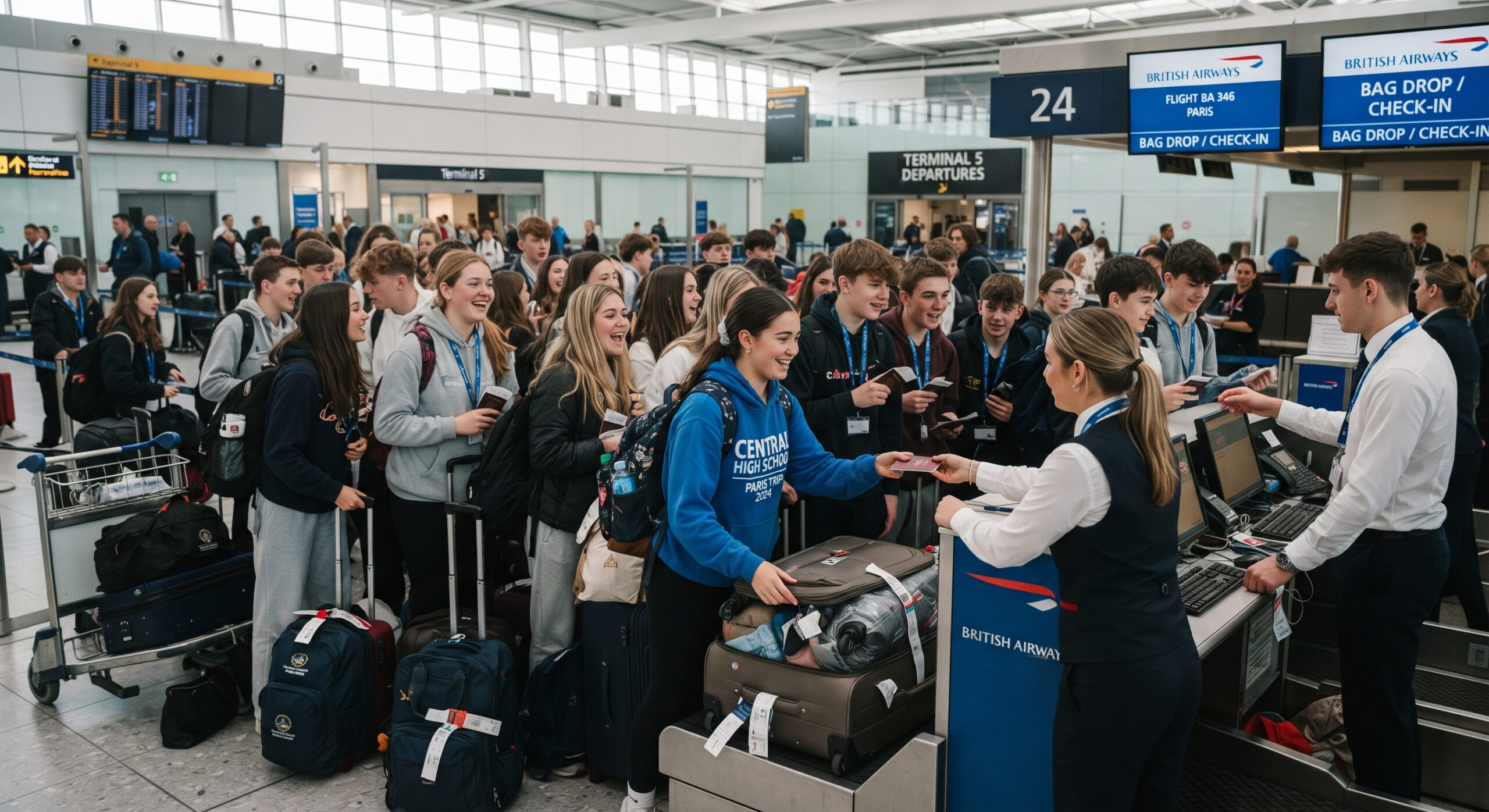

Taking a student group through the airport in the spring means dealing with heavy crowds, strict TSA rules, and tight group logistics. Because terminals can become especially busy, building in extra buffer time and setting clear ground rules beforehand will keep your travel day on track.
Managing Crowds & Timing
- Arrive Early: Get to the airport at least 2.5 to 3 hours before domestic flights, and 3.5 to 4 hours before international ones. Checking in, dropping bags, and moving dozens of students through security takes much longer during the March and April rush.
- Prep for Weather & Delays: Spring storms and high winds frequently cause gate changes and schedule shifts. Set up one central communication channel—like a group messaging app or chaperone text thread—so everyone gets updates right away.
- Use Checkpoints & the Buddy System: Set mandatory meeting spots right after bag drop, immediately past TSA, and at the gate. Students should never walk around the terminal alone; require them to stay in groups of at least 3 or 4 for food or restroom breaks.
IDs & Essential Paperwork
- Domestic ID Rules: On domestic U.S. flights, TSA doesn’t require travelers under 18 to show a photo ID, though a school ID is useful to carry. Any student 18 or older—along with all adult chaperones—must have a REAL ID-compliant driver’s license, a state ID, or a valid U.S. passport.
- International & Group Documents: For international travel, every person needs a passport valid for at least six months past your return date, plus signed parental consent and medical release forms. Chaperones should carry both paper and digital backups of everyone’s IDs and boarding passes.
TSA & Packing Pitfalls
- Follow the 3-1-1 Rule: Toiletries are the biggest hold-up for first-time flyers. Carry-on liquids, gels, and aerosols must be 3.4 ounces (100 ml) or smaller and fit inside a single, clear, quart-sized zip-top bag. Full-size sunscreen, hairspray, and water bottles need to be emptied or packed in checked luggage.
- Pack Electronics in Carry-Ons: Laptops, tablets, portable power banks, and spare lithium batteries are strictly prohibited in checked bags—make sure students keep them in their carry-ons.
- Plan for Instruments & Gear: Check your airline’s size policies well in advance if you’re bringing performance gear. Smaller instruments (like violins, flutes, or clarinets) typically count as a carry-on for the overhead bin, while larger instruments must be gate-checked in hard-shell cases or booked into a separate seat or cargo hold.
- Practice Good Security Etiquette: Have students empty their pockets and remove belts or heavy jewelry before reaching the scanner. Remind them to take the process seriously, as joking in TSA or customs lines can trigger secondary screening and hold up the entire group.
Smart Carry-On Packing Spring flights usually fly at full capacity, meaning overhead bins fill up quickly and checked luggage can sometimes get delayed. Have every student pack a personal backpack containing one full change of clothes, essential medications, chargers, and any critical performance attire so a missing suitcase won’t derail your first day.
Click link for your perfect Student Spring Air Travel & Airport Checklist

